Eddie Hall's Muscular Insights: What Makes a Strongman Extraordinary
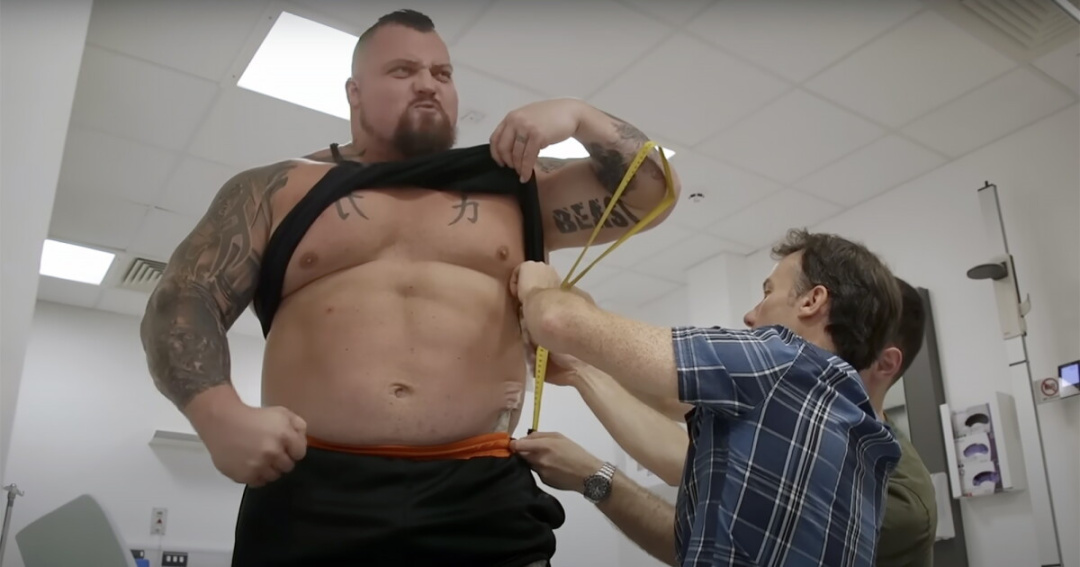
Eddie Hall, known as 'the Beast' and crowned the 2017 World’s Strongest Man, has been the subject of a recent study that sheds light on the anatomical secrets behind his remarkable strength. Standing at 6 feet 2.5 inches (189 cm) and weighing between 313 and 434 pounds (142-197 kg) during his career, Hall is best known for his world-record-setting 1,102-pound (500 kg) deadlift in 2016. Researchers at Loughborough University aimed to understand the unique muscular adaptations that enable Hall to achieve such extraordinary feats, with implications that could benefit both athletes and the general population.
Dr. Tom Balshaw, the lead author of the study from the School of Sport, Exercise and Health Sciences at Loughborough University, emphasized the importance of understanding muscular strength in relation to athletic performance, injury prevention, and healthy aging. Despite Hall's accolades, the scientific community's knowledge of extreme human strength remains limited, which is why this study is so significant.
For the Training Room
Sponsor press complete.
Over his 15-year strongman career, Hall engaged in rigorous upper- and lower-body resistance training. His training regimen included lower-body squats, deadlifts, leg presses, and various upper-body exercises. Notably, he refrained from strenuous activity for 24 hours prior to the testing phase of the study, allowing researchers to assess his muscle capabilities accurately.
Using state-of-the-art 3.0-T MRI scans, the researchers evaluated the size of 22 individual lower-limb muscles, five functional muscle groups, and the cross-sectional area of the patellar tendon. This advanced imaging technique provided clearer insights into Hall's muscular structure compared to traditional MRI scans. Additionally, Hall performed countermovement jumps (CMJ) and isometric mid-thigh pulls (IMTP) to measure his explosive power and overall strength.
The results were striking. Hall's total muscle volume in the 22 lower-limb muscles was found to be nearly double (+96%) that of untrained men, 63% greater than sub-elite athletes, and 32% more than elite 100m sprinters. The most significant differences were observed in the 'guy ropes'—the sartorius, gracilis, and semitendinosus muscles—which are crucial for stabilizing the pelvis and thigh. Hall's measurements showed increases of +140% for the gracilis, +157% for the semitendinosus, and a remarkable +202% for the sartorius compared to untrained individuals.
Hall's Exceptional Muscle Development Findings
In addition, Hall's plantar flexors, responsible for toe extension and stabilization, exhibited muscle volume increases of +120% against untrained individuals, +100% against sub-elite sprinters, and +70% against elite sprinters. His gross IMTP peak force was 54% greater than that of sub-elite weightlifters, while his net IMTP peak force was double that of collegiate soccer players. Furthermore, his peak CMJ power exceeded that of untrained individuals by more than 2.5 times (164%) and was 51% greater than professional basketball players.
Jonathan Folland, a professor of neuromuscular performance and the study's corresponding author, noted the unexpected findings regarding the development of Hall's stabilizing muscles. While it was anticipated that the larger muscles involved in knee and hip extension would be most developed, the study revealed that the stabilizing muscles were even more pronounced. This suggests that these muscles may play a more critical role in heavy lifting and carrying than previously understood.
Improve your workout
The insights gained from studying an athlete like Eddie Hall, who represents the upper limits of human strength, provide valuable information on muscle function and adaptability. Dr. Balshaw concluded that the research underscores the potential for all individuals to enhance their muscular systems, thereby improving their functional capabilities and performance.
The findings of this study have been published in the Journal of Applied Physiology, marking a significant contribution to the understanding of muscular strength and its applications in athletic and everyday contexts.