Smartphone Apps Show Validity in Measuring Barbell Velocity for Powerlifters
A recent study published in PLOS ONE investigated the validity of three smartphone applications—Qwik VBT, Metric VBT, and MyLift—designed to measure barbell movement velocity in resistance training. This research is particularly relevant for powerlifters looking to enhance their training with technology that is both accessible and affordable. The study involved twenty competitive powerlifters, comprising 14 males and 6 females, who performed a series of lifts including the squat, bench press, and deadlift, progressively loading until they reached 90% of their competition best.
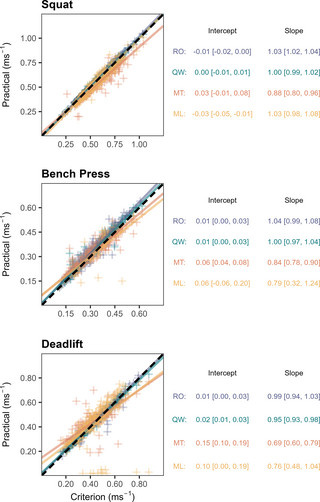
The primary aim was to compare the velocity measurements obtained from the smartphone apps against a commercially available linear transducer, RepOne, and a gold standard 3D motion capture system, Vicon. Throughout the study, a total of 589 repetitions were recorded, with mean velocities calculated. The results indicated that while the smartphone apps showed promise, there were notable discrepancies in their accuracy. Specifically, Metric VBT and MyLift failed to identify a significant number of repetitions, which raises questions about their reliability in a competitive setting.
For the Training Room
Sponsor press complete.
In terms of performance, Qwik VBT emerged as the most effective app, consistently delivering valid measurements when compared to the Vicon system. The study highlighted that smartphone apps could serve as a viable alternative to more expensive linear transducers, potentially democratizing access to velocity-based training (VBT) tools for athletes at all levels. However, the findings also underscored the importance of understanding the limitations of these technologies, particularly in real-world applications where factors like camera angle and movement dynamics can affect accuracy.
Impacts of Technology on Training Strategies
The implications of this research are significant for powerlifting athletes and coaches. With the growing trend of integrating technology into training regimens, the ability to accurately measure barbell velocity can enhance performance monitoring and training adaptations. As velocity-based training continues to gain traction, tools that provide reliable data without the hefty price tag of traditional systems could reshape training methodologies.
Evaluating Smartphone Technology in Powerlifting
The study's findings contribute to the ongoing discourse about the role of technology in strength training. As powerlifting evolves, the integration of smartphone applications may provide a pathway for more athletes to engage with data-driven training approaches. While the results are promising, further research is needed to refine these applications and ensure they meet the rigorous demands of competitive powerlifting. The potential for smartphone technology to enhance training accessibility is immense, but athletes must remain vigilant about the accuracy and reliability of the tools they choose to utilize.
In conclusion, the research indicates that while smartphone applications can be as valid as linear transducers for measuring barbell velocity, athletes and coaches should carefully consider which app to use based on its performance in real-world settings. Qwik VBT stands out as a leading option, but ongoing validation and user feedback will be essential to ensure these tools can effectively support the training needs of powerlifters.