Evaluating Force-Velocity Profiles: Two-Point Methods in Leg Press Training
Accurate assessment of an individual’s force-velocity (F-V) profile is crucial for prescribing targeted resistance training. However, the outcomes of such assessments can vary significantly based on the testing methods employed. A recent study conducted by researchers at Keio University investigated the concurrent validity of the F-V relationship in horizontal leg press exercises, comparing two-point methods with a more traditional multiple-point approach.
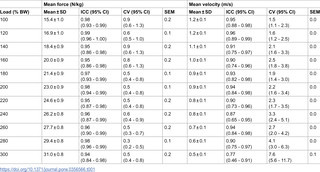
The study involved sixteen male participants, averaging 20 years of age, who performed maximal-effort leg press actions using a device equipped with pneumatic artificial muscles. The participants were tested against eleven external loads ranging from 100% to 300% of their body weight, with the F-V relationship parameters derived from both two-point and multiple-point methods. The researchers aimed to determine whether the simplified two-point methods could yield results comparable to the more comprehensive multiple-point assessments.
For the Training Room
Sponsor press complete.
Findings indicated that the F-V relationship obtained from two-point methods, particularly those utilizing larger load differences, showed a nearly perfect correlation with results from the multiple-point method. Specifically, the correlation coefficients ranged from 0.906 to 0.993 for the most effective two-point combinations. Conversely, when using loads that were closer together, the validity of the two-point methods tended to decrease. These results suggest that a two-point method based on sufficiently distinct loads can provide an accurate estimate of the F-V relationship, making it a viable alternative for practitioners and researchers alike.
The significance of this study lies in its potential to streamline the assessment process in resistance training. Traditional methods often require multiple data points, which can be time-consuming and taxing for both athletes and researchers. The high linearity of the F-V relationship in leg press exercises allows for a reduction in the number of required data points, simplifying the profiling process without sacrificing accuracy.
Transforming Training Assessments with Efficiency
The implications for training programs are substantial. By adopting a two-point approach, coaches and trainers can quickly assess an athlete's F-V profile, enabling them to tailor training regimens that target specific weaknesses and enhance overall performance. This method not only reduces the time spent on assessments but also minimizes the fatigue experienced by athletes during testing, ultimately leading to more effective training sessions.
Implications for Resistance Training
As resistance training continues to evolve, the findings from this study underscore the importance of utilizing efficient and reliable assessment methods. The ability to accurately gauge an athlete's force and velocity capabilities can significantly influence training outcomes, paving the way for more personalized and effective strength training strategies.
In conclusion, the research conducted at Keio University highlights the concurrent validity of two-point methods for assessing F-V profiles in leg press exercises. As the fitness landscape becomes increasingly competitive, adopting such innovative assessment techniques may provide athletes with a crucial edge in their training. Coaches and trainers are encouraged to consider integrating these findings into their methodologies to optimize performance and enhance training effectiveness. The study not only contributes to the body of knowledge in strength training but also offers practical solutions for improving athlete assessment and training outcomes.